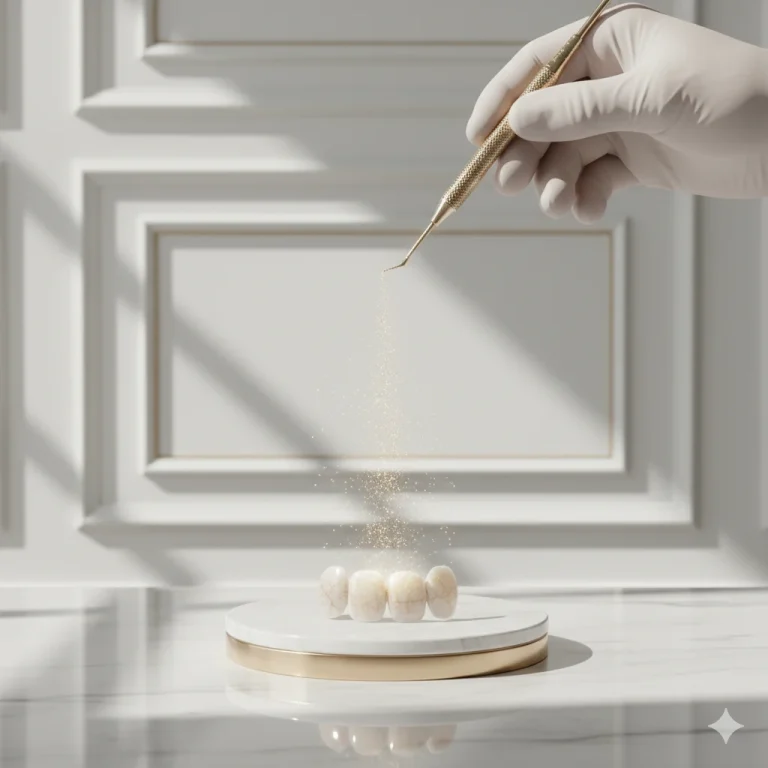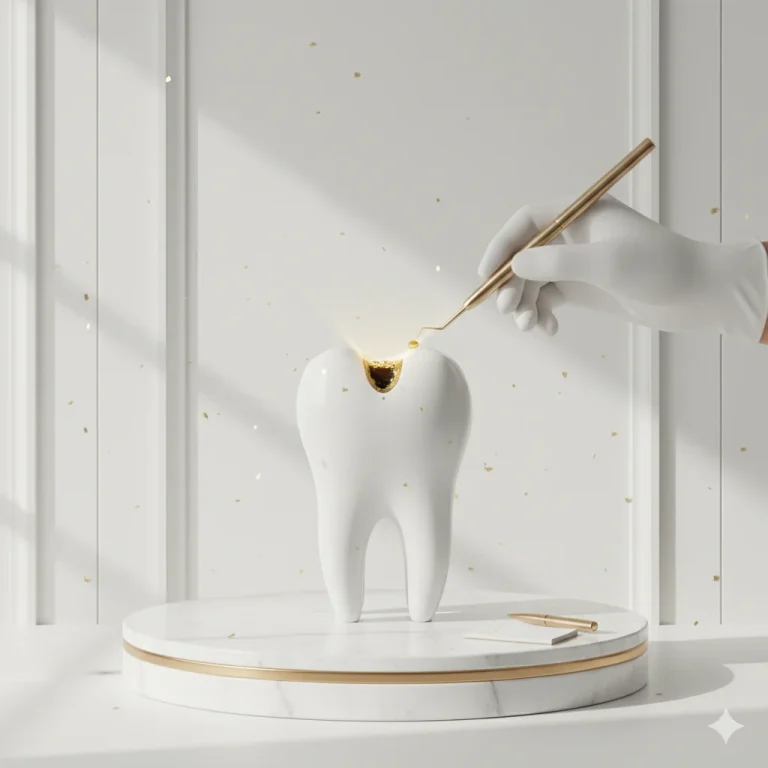











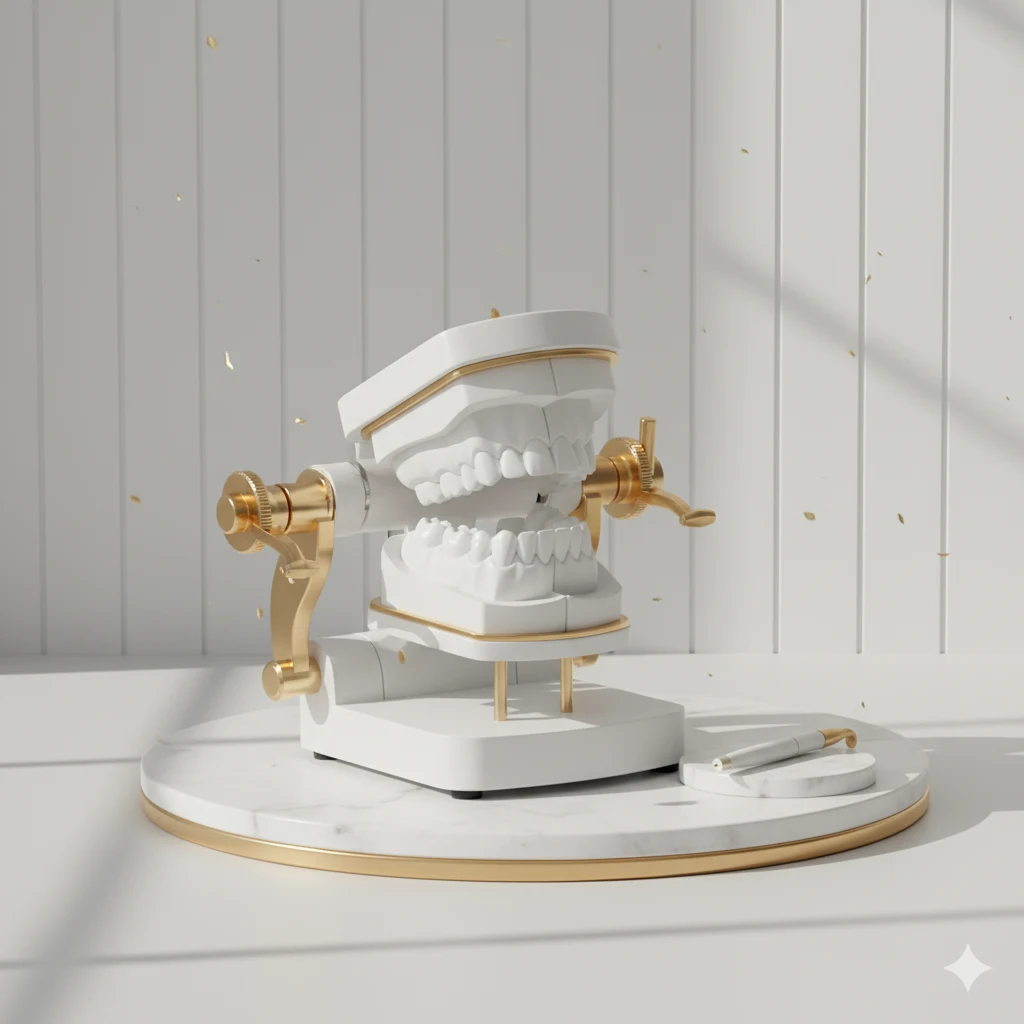
Prosthetic dental treatment aims to restore not only chewing function but also smile aesthetics, speech and self-confidence in cases of missing teeth.
At Valinor Dental Clinic Dentures are not just structures made to replace missing teeth; they are personalized, digitally planned works of art.
1. Fixed Prosthetics
Fixed dentures are dentures that are permanently bonded to the teeth and are not removed or worn daily.
Porcelain Crowns
- It covers the entirety of a single tooth.
- It is a durable and aesthetic solution.
- It is especially preferred for large bruises or fractures.
- With different color options, results closest to the natural look are achieved.
Zirconium Crowns
- It provides a natural tooth appearance with its light transmittance.
- It is biocompatible and gum-friendly.
- Since it does not contain metal, there is no risk of allergy.
- It provides both aesthetics in the front area and durability in the back area.
Metal-Backed Porcelains
- Used for high durability in the rear areas.
- It is more cost-effective.
- It is aesthetically limited compared to zirconium, but functionally stronger.
Bridge Prosthetics
- It is applied when more than one tooth is missing.
- The missing area is completed by getting support from neighboring teeth.
- There are 3-, 5- or full arch bridge options.
- It is made more comfortable with modern designs.
Inlay–Onlay Restorations
- It is used in partial tissue losses.
- It offers CAD/CAM supported aesthetic and durable solutions.
- As an alternative to large fillings, it is successful both functionally and aesthetically.
2. Removable Prosthetics
- Complete Dentures (Total): Applied when all teeth are missing. It restores speech, chewing, and aesthetics.
- Partial Denture: Used when several teeth are missing. Options are available with metal or flexible substructures.
- Flexible Prosthesis: These are metal-free, more aesthetic and comfortable prostheses.
- Implant-Supported Removable Prosthesis: The prosthesis becomes much safer by being fixed with implants.
3. Implant-supported Prosthetics
It is the most modern method for completing missing teeth.
Single Tooth Missing
- Neighboring teeth are not cut.
- Colour and form are adapted to the individual.
Multiple Missing Teeth
- The solution is provided with implant-supported bridges.
- A more natural chewing function is achieved.
In Case of Complete Edentition
- All-on-4 and All-on-6 systems.
- Fixed full arch prostheses.
- It provides both function and aesthetics.
Advantages
- Natural look.
- Recovery of chewing function.
- Long-lasting solutions.
- Comfortable use.
4. Digital Prosthetics
It is the most modern approach of the digital age.
Digital Measurement
- Instead of classical measurement, an intraoral scanner is used.
- Faster, more precise, more comfortable.
CAD/CAM Design
- Computer aided digital design.
- Millimetric fit and high precision.
3D Printer and Milling Systems
- Error-free production.
- More durable materials.
Advantages
- It will be completed in a short time.
- Aesthetic harmony is at the highest level.
- The patient actively participates in the process.
5. Aesthetic Dimension
Prosthetic treatment not only replaces missing teeth, but is also the most important part of smile design.
- Smile Line: It is designed according to the lip and face form.
- Tooth Color: It is chosen to be compatible with skin, eye and hair tone.
- Form and Length: It is planned according to the face shape.
- Naturalness: Artificial appearance is strictly avoided.
- Personalized Planning: Proceeds with digital rehearsal and patient approval.
6. Maxillofacial Prosthetics
- Obturator Prostheses: For cleft lip and palate or post-surgical defects.
- Facial Prosthetics: For eye, nose and chin losses.
- Functional Prosthetics: Provides support for speech and swallowing.
Valinor Dental Clinic Difference
- Multidisciplinary approach (prosthodontist, surgeon, aesthetic dentist).
- Selection of the highest quality biocompatible materials.
- Digital measurement and CAD/CAM production systems.
- Each prosthesis is also a personalized smile design.
Prosthetic Dentistry Frequently Asked Questions (FAQ)
- What is a fixed prosthesis?
Fixed dentures are dentures that are permanently bonded to the teeth and are not removed daily. - Which is better, zirconium or porcelain?
Zirconium may be more aesthetic and biocompatible, while porcelain may be more economical. - How long do bridge dentures last?
It can be used for 10–15 years with regular maintenance. - Do metal-supported crowns cause allergies?
It may occur in some sensitive individuals, so biocompatible materials are preferred. - Why are inlay-onlay fillings preferred?
Because they are more durable and aesthetic than classic fillings. - Do fixed dentures damage the gums?
No, when applied correctly, gum health is protected. - Is it painful to have a crown fitted?
No, it is completely painless with local anesthesia. - Do crowns change color over time?
Quality materials preserve their color for many years. - Will there be a natural appearance after a fixed prosthesis?
Yes, nature is a priority in Valinor. - Is a check-up necessary after fixed prosthesis?
Yes, regular checkups prolong its life. - What is a removable prosthesis?
These are prostheses that can be inserted and removed by the patient. - Who can get a full denture?
It is applied to people who have lost all their teeth. - What is a partial denture?
It is a removable prosthesis used in cases of some missing teeth. - What is the advantage of flexible prosthesis?
It is more comfortable and aesthetic because it does not contain metal. - How long do removable dentures last?
5–10 years depending on care. - Should removable dentures be removed at night?
Yes, for tissue health. - Will removable dentures slip while eating?
It may be difficult at first, but then you get used to it. - How to clean removable dentures?
The denture is cleaned with a brush and special tablets. - Does removable dentures affect speech?
It may affect you initially, but it will improve over time. - Is there any pain when wearing a removable prosthesis?
There may be slight pressure in the first few days, but it will pass later. - What is an implant-supported prosthesis?
It is a prosthesis fixed to implants. - Implant or bridge for a single missing tooth?
Implants are better because they do not harm neighboring teeth. - What is All-on-4?
It is a fixed prosthesis made on 4 implants in cases of complete edentulism. - What is All-on-6?
It is a fixed prosthesis made on 6 implants. - Do implant-supported dentures provide aesthetic results?
Yes, a natural tooth appearance is achieved. - What is the lifespan of implant-supported dentures?
It can be used for up to 20 years with regular maintenance. - How long does it take to return to daily life after implant-supported dentures?
Usually within a few days. - How to clean implant-supported dentures?
With brush, interdental brush and special threads. - Does implant-supported dentures affect speech?
No, adaptation occurs in a short time. - What is the difference between Valinor and implant prosthesis?
Digital planning, the combination of aesthetics and function. - What is a digital prosthesis?
It is a prosthesis prepared with CAD/CAM technology. - Is taking digital measurements comfortable?
Yes, it is very comfortable compared to the classic size. - Are digital prosthetics made faster?
Yes, production time is short. - What is the aesthetic advantage of digital prosthetics?
Millimetric harmony and naturalness. - How much do digital prosthetics cost?
It depends on technology but is advantageous in the long run. - Are digital prosthetics durable?
Yes, manufacturing error is very low. - Who can use digital prosthesis?
For anyone who wants a fixed and implant-supported prosthesis. - Can digital proofing be done?
Yes, a model is prepared in advance with a 3D printer. - What is the error rate in digital systems?
Much lower than the classic size. - What is the difference between Valinor's digital prosthesis?
High technology and aesthetic harmony. - How to choose the color of aesthetic prosthetics?
According to skin, eye and hair tone. - Do aesthetic prosthetics have an artificial appearance?
No, naturalness is achieved. - Are aesthetic prosthetics included in smile design?
Yes, dentures are a part of the smile. - How long do aesthetic prosthetics last?
10–15 years. - Can the aesthetic appearance be preserved after the prosthesis?
Yes, with regular maintenance. - What materials are aesthetic prosthetics made of?
Zirconium, porcelain, ceramic. - Is smile design important in prosthetics?
Yes, personalized planning is available. - Do aesthetic prosthetics look natural?
Yes, it is indistinguishable from natural teeth. - Is aesthetic prosthesis affected by smoking?
Yes, there may be color change. - What is Valinor's aesthetic prosthesis difference?
The combination of science, art and technology. - What is a maxillofacial prosthesis?
These are prostheses used in cases of jaw-face loss. - What is an obturator prosthesis?
It is a prosthesis used in palate defects. - Who can get facial prosthetics?
Losses after tumor surgery. - Does maxillofacial prosthesis provide aesthetics?
Yes, function and aesthetics go together. - What are the benefits of functional prosthetics?
Provides support for speaking and swallowing. - Are maxillofacial prosthetics permanent?
Yes, it can be used for a long time. - Does a maxillofacial prosthesis improve speech?
Yes, especially in cases of palate defects. - What materials is a maxillofacial prosthesis made of?
Biocompatible acrylics and ceramics. - How to care for maxillofacial prosthesis?
Regular cleaning with special cleaners. - What is Valinor's maxillofacial difference?
Multidisciplinary approach and high technology. - How many years does prosthetic treatment last?
10–20 years depending on care. - Is it painful to have a prosthesis?
No, local anesthesia is applied. - Is it necessary to have a tooth extracted before getting a denture?
If necessary, yes. - Is a check-up necessary after prosthetic treatment?
Yes, a check-up every 6 months is recommended. - Do dentures feel like natural teeth?
Yes, especially in implant-supported dentures. - Is there any problem while eating with dentures?
No, it is normal after the adaptation period. - Do dentures affect speech?
Adaptation is achieved in a short time. - What happens if dentures are not cleaned?
Bad breath, gum disease and shortened denture life. - Are the materials used in prosthetics safe?
Yes, it is biocompatible and internationally standardized. - Can prosthetic treatment be performed on children?
It is usually performed on adults, but in some special cases it can also be performed on children. - Do prosthetics change color?
No, it will not last long with quality materials. - Do dentures cause decay?
No, but the natural tooth underneath must be preserved. - Can dentures be brushed?
Yes, with a toothbrush and special products. - What determines the cost of prosthesis?
By material, technology and type of treatment. - What is the adaptation period after the prosthesis is fitted?
Within 1–2 weeks. - Can I do sports with prosthetics?
Yes, in fixed prosthetics. - If the prosthesis breaks, can it be repaired?
Removable dentures can be repaired. - Is smoking harmful while wearing dentures?
Yes, it damages the color and texture health. - Do dentures cause bad breath?
Yes, if cleaning is not done. - Do dentures require regular maintenance?
Yes, it extends your life. - Is prosthetic treatment necessary for aesthetic reasons?
Yes, it is important in smile design. - Do prosthetics increase self-confidence?
Absolutely yes. - Are prosthetics affected by weight gain or loss?
Yes, for removable dentures. - What is precision attachment in dentures?
It is an aesthetic connection system for partial dentures. - How is intraoral compatibility of dentures ensured?
With digital measurement and fitting. - Will there be pain after prosthetic treatment?
There may be short-term sensitivity. - Are the adhesives used in dentures safe?
Yes, it is medically approved. - How can the lifespan of prosthetics be extended?
With regular maintenance and checks. - Can I eat hard foods with dentures?
Yes, but be careful with very hard foods. - How is social life affected after prosthetic treatment?
Self-confidence and quality of life increase. - Do dentures cause gum recession?
No, but gum health should be protected. - Do prosthetics itch?
It may be during the adaptation period. - Can the color of the prostheses be changed later?
No, it needs to be renewed. - Will the shine of dentures fade?
It may be renewed over time by polishing. - Will there be nausea while wearing dentures?
It may happen in the first days of removable dentures. - Is teeth grinding harmful when wearing dentures?
Yes, it creates a risk of breakage. - Are there any allergic reactions to prosthetics?
Yes, although rare. - Is there a warranty on prosthetics?
Yes, for certain periods of time. - Can dentures be distinguished from natural teeth?
No, especially with Valinor's aesthetic prosthetics. - Why should I have prosthetic treatment at Valinor Dental Clinic?
Because here, advanced technology, aesthetic sensitivity and a multidisciplinary approach come together.
Valinor Dental Clinic’At , prosthetic dental treatment is performed with a combination of scientific precision, advanced technology, and aesthetic sensitivity. Here, each prosthesis is not merely a replacement for a missing tooth; it complements a personalized smile design.
Site contents are for informational purposes only and do not constitute advice.