










Orthodontics does not only mean “straight teeth”; it also means a healthy bite, a functional jaw relationship and an aesthetic smile.
Valinor treatments are shaped around digital planning, minimizing loss of comfort, and long-term stability.
1) Definition, Malocclusions and Function
- Class I/II/III skeletal pattern: Jaw relationships and profile effects.
- Dental problems: Crowding, gaps, impacted teeth, tooth rotation.
- Functional disorders: Open bite, deep bite, cross bite, tongue thrust, mouth breathing.
- TMJ (jaw joint) and airway: Assessment in relation to closure balance and quality of life.
2) Treatment Options
- Metal brackets: Durable, high control power.
- Aesthetic/ceramic brackets: Low visibility, stylish.
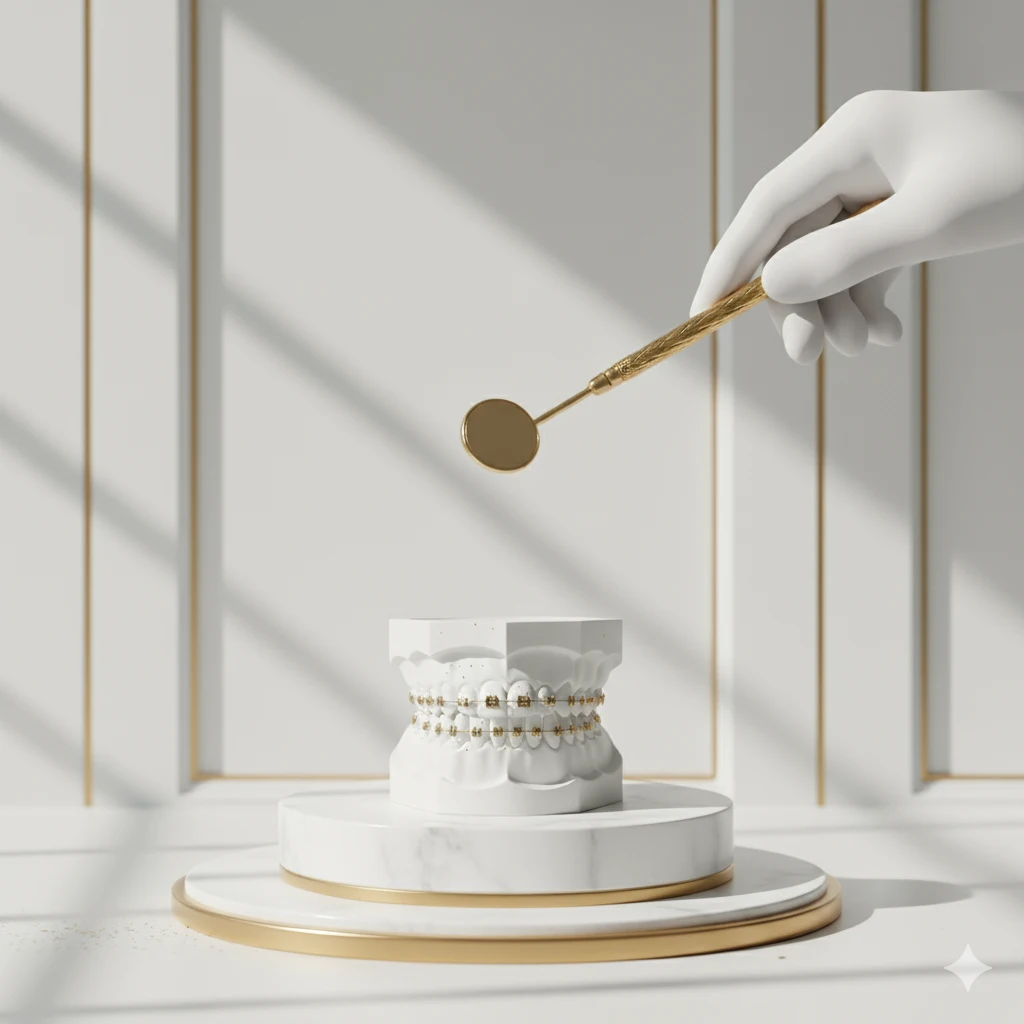
- Lingual orthodontics: Brackets behind the teeth; high level of aesthetics.
- Clear aligners: Removable, comfortable and social life friendly.
- Temporary anchorage screws (TAD): Micro-anchorage support in difficult tooth movements.
- Functional appliances (during adolescence): Mandibular/maxillary guidance.
- Surgical orthodontics (advanced cases): Skeletal correction combined with orthognathic surgery.
3) Orthodontics According to Age
- Early assessment (≈7 years): Developmental map, bad habit management, space constraints prediction.
- Adolescence: Fixed appliances or trays with the eruption of permanent teeth.
- Adulthood: Options focused on aesthetics (clear aligners, lingual); integrated with periodontics and prosthetics.
4) Digital Orthodontics and Simulation
- Intraoral scanning: Fast, without measurement distortion.
- Digital setup & simulation: Direction, duration and result of the movement are shown from the front.
- 3D printing: Customization of plate/bracket placement templates.
5) Retention and Stability
- Fixed retainer (thin wire): Long-term stability in the front teeth.
- Hawley/Essix clear aligners: Daily wear protocol.
- Relapse prevention: Depends on usage discipline and hygiene.
6) Valinor Difference — Orthodontics
- Digital foresight: Simulating treatment and transparent sharing.
- Aesthetic focus: Planning without interrupting social life.
- Multidisciplinary integration: Coordinated approach with periodontics, surgery and prosthetics.
- Gentle follow-up: Comfortable sessions, minimum pain, maximum control.
Frequently Asked Questions (FAQ) — Orthodontics
1) When should the first orthodontic examination occur?
≈7 years of age. Early assessment makes subsequent interventions shorter and easier.
2) Can orthodontics be applied to adults?
Yes. Teeth can move throughout life; aesthetic solutions (clear aligners/lingual) are available.
3) Clear aligners or braces?
It depends on the difficulty of the case, the duration, and aesthetic expectations. Plates are comfortable and invisible; braces may be superior for some complex movements.
4) How long is the treatment period?
Generally 12–24 months. Transparent aligners may be similar or shorter depending on the case.
5) Will there be pain?
A slight feeling of pressure is normal in the first few days; it will subside within a few days.
6) What can I eat with braces?
Avoid very hard, sticky foods. Because plaque can be removed, dietary restrictions are minimal.
7) How will I ensure hygiene?
Electric/soft brush, interdental brush, water jet; regular professional cleaning.
8) The wire is broken/damaged; what should I do?
Use orthodontic wax temporarily, call the clinic.
9) Why is retainer necessary?
Teeth gradually adapt to their new positions. Reinforcement prevents relapse (return).
10) In which cases is surgical orthodontics necessary?
In advanced skeletal disorders (Class II/III, severe asymmetry).
11) Is TAD (temporary anchor screw) safe?
Yes. Small screws placed under local anesthesia provide support during difficult movements.
12) Do clear aligners affect speech?
Temporary mild effects may occur, but most people adapt quickly.
13) Will my teeth deteriorate again after the treatment is completed?
Stability is maintained through compliance with reinforcement, hygiene and regular control.
14) Will orthodontics weaken my teeth?
No. Improper hygiene can cause problems; with proper care and controlled forces, teeth remain healthy.
15) What is the difference in orthodontics at Valinor?
Digital simulation, aesthetic & comfort-oriented planning, multidisciplinary approach and gentle follow-up.
From your child's first brushing to your adult aesthetic plan, the entire journey is personalized, gentle, and transparent. Our goal is to maintain a healthy, functional, and natural smile for life.
Site contents are for informational purposes only and do not constitute advice.